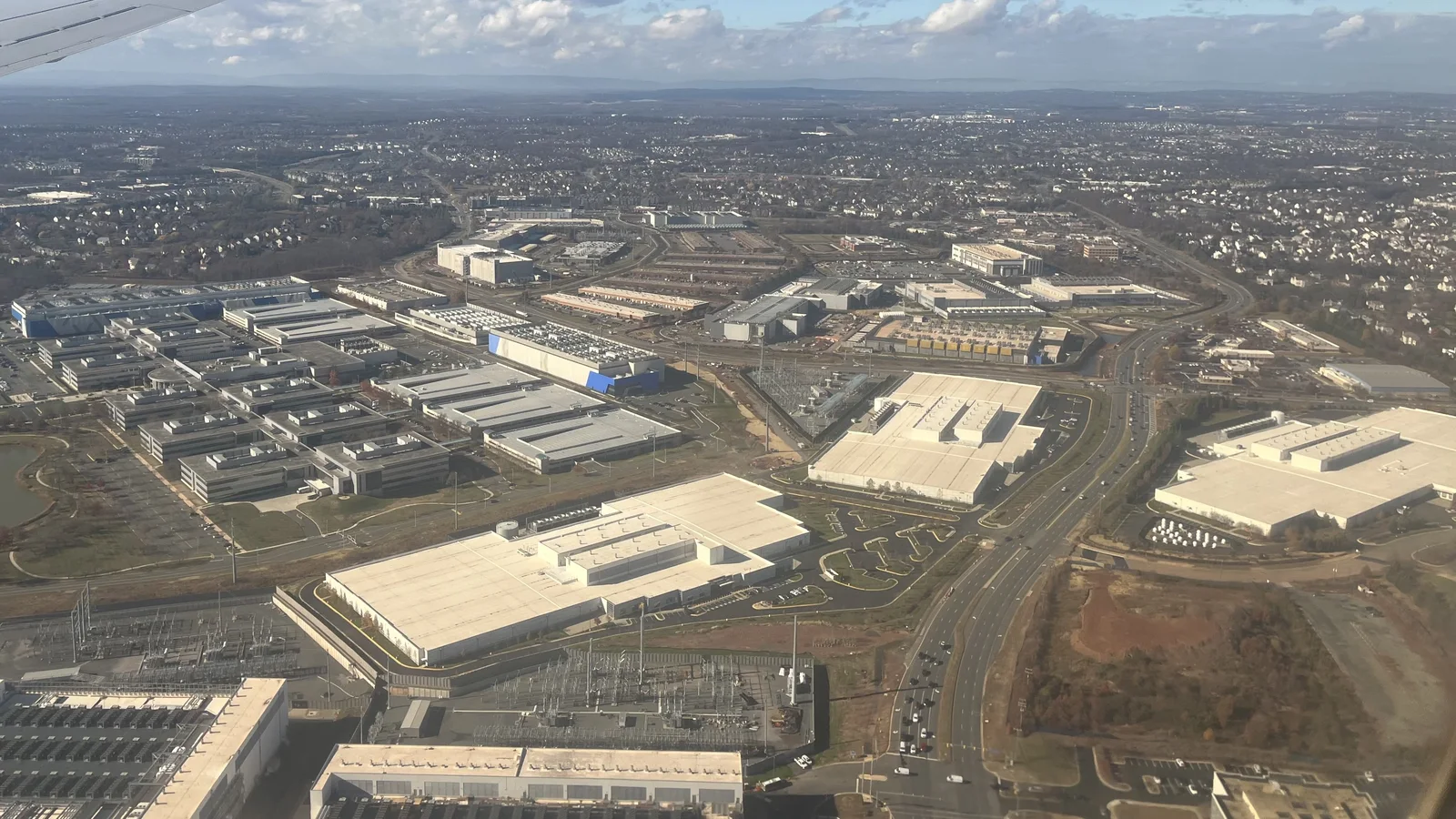
The interesting question about cheap Chinese models is not whether they are good. It is who pays for the data centres built to beat them.
This site has been round this subject twice in five weeks, both times from the other side. First the DeepSeek moment a year on. Then a 7-month gap, measured from 22,113 results across 1,011 sources. What the models could do, then how far behind the open ones were. This one is the invoice.
Plainly: desk research, an assessment, no hands-on use and no data of my own. Nothing below ran in my lab. I have not seen the Jefferies note, because it is not public — no copy, no excerpt, nothing a reader can check. Every figure from it is here as The Register reported it on 13 October, quoting the note.
What the note is reported to say
The Register’s Lindsay Clark sets out the case. The four cloud firms — Microsoft, Alphabet, Amazon and Oracle — hold roughly $2.3 trillion of signed contracts. About 50% is reported to sit with OpenAI and Anthropic. Cheap open weights threaten those two labs’ prices, and a price cut at the tenant is a problem for the landlord.
Half of $2.3 trillion is $1.15 trillion, which is my sum and not a published figure.
As quoted, the note says it “can no longer be assumed” that large models will ever be profitable, “given the related ongoing collapse in token pricing”. It asks whether the four will spend $993 billion of capex in 2027.
Watch that figure. In July, an earlier note was reported to put 2026 at $695 billion and 2027 at $870 billion. Three months later, 2027 is $993 billion. The forecast climbed $123 billion and the doubt stayed put.
The bill, from the companies’ own filings
Microsoft’s year to June brought $331.8 billion of revenue and $115.9 billion of capex, against $64.6 billion the year before. Its contracted backlog, which it calls remaining performance obligation, stood at $678 billion, up 84%.
Alphabet’s first-half capex was $80.6 billion, against $39.6 billion a year earlier. Cash from operations was $84.9 billion, so the build was covered. It still raised $49.6 billion of equity and $20.3 billion of notes, for what its release calls “capital expenditures to scale AI infrastructure”. Long-term debt went from $46.5 billion to $98.2 billion.
Covering this year’s bill and raising almost $70 billion anyway is the tell: they are building for a bigger one.
The profits include a mark, not a cheque
Alphabet’s June quarter: $98.0 billion of other income, mostly paper gains on its stakes, against $40.8 billion of operating profit. Net income was $112.2 billion. Microsoft’s quarter included a $3.2 billion gain on its stake in Anthropic; its year took in $4.96 billion from OpenAI.
The Register’s account finds it across all four. Earnings on an annual run rate rose $222 billion to $581 billion in the year to the second quarter of 2026. Other non-operating income was all of it.
The cloud firm sells compute to a lab, and owns a piece of the lab. When the lab is marked up, the gain lands in earnings. Compute revenue is cash. The gain is an opinion about a private firm, set by the last funding round.
Nobody is cooking the books. But part of the profit paying for the buildout is a mark on the customers’ own valuations. That leaves the buildout resting on the bets the price war is meant to test. A loop, not a base.
The tokens moved, and the mix barely moved
The Register reports the note citing OpenRouter: in the 7 days to 27 September, Chinese models moved 76.12 trillion tokens, against 4.37 trillion 5 months earlier. The four biggest US firms handled 14.2 trillion that week. A July note had the same comparison at 36.39 trillion to 7.39 trillion.
Two readings, 10 weeks apart. Volume doubled. The ratio barely moved: 4.9 to 1 in July, 5.4 to 1 in September.
I can check the trend without the broker. Dror Poleg’s chart is built from OpenRouter’s public data under a CC BY licence. It puts Chinese models at 71% of tokens in the 7 days to 18 October, up from 7% in January 2025. Open weights carried 77%. One marketplace, and a strange one: heavy on coding and roleplay, missing the traffic that goes to ChatGPT or Claude. Not the AI market, but the best public window there is, and it points the same way.
Epoch AI tracks the price side. It finds the price to match GPT-4 on PhD-level science fell about 40 times a year; across 6 tests the range runs from 9 to 900.
Volume is climbing fast. Price is falling faster. The bill for the factories was written when both curves looked friendlier.
Where the note outruns its evidence
Two things need a caveat. One needs a wall around it.
The Kimi K3 line. The note is reported as calling Moonshot’s open model a frontier rival, at an estimated 95% as good as one closed model. Two outlets carried it. I am not repeating it as a result, because it is not one. It is an estimate inside a private note, with no method and no way to check. The piece linked above exists because this site does not treat a single score as a finding.
Bain’s numbers. Its own release, 29 September, says the industry needs $6 trillion of annual revenue by 2031. Existing uses might reach $1.2 trillion to $1.8 trillion; the other $4.2 trillion must come from categories that mostly do not exist at scale. A demand forecast dressed as arithmetic, and still a claim about 2031.
What a price reset means if you own the box
Cheap tokens are good for me now. I would rather pay less per token. But a price below cost is a subsidy, and subsidies end when the capital behind them does. The question is not whether the cheap API is a bargain. It is what the terms look like when the people funding it stop.
The good news is specific. Open weights cannot be recalled. Once Moonshot or DeepSeek publishes a model, a credit event in Virginia does not take it off my disk. A reset can cancel a campus, strand a lease and mark down a stake. It cannot un-publish a file. The local model is the one asset here that survives intact.
The bad news is as specific. A good model on your own hardware costs money up front, and the API is cheaper this month. The hedge is not free; it is just yours.
One more risk gets less attention. The 7-month gap makes the reset possible and the hedge work. If the buildout slows, the closed labs lose the compute to widen the gap, and the open side keeps publishing. That is the case where the cheap API you built on gets repriced overnight, because the provider buying share with your tokens ran out of other people’s money.
What to watch from here
Watch capex against backlog. Microsoft’s $678 billion of signed work looks enormous until you set it beside $115.9 billion of annual spend and a backlog that is 50% one customer’s problem. If the backlog grows slower than the building, the orders are not there.
Watch the invoice, not the list price. If your bill is flat while the model gets better, you are paying for more than compute.
And keep one model on your own hardware. Not because the cloud fails tomorrow. Because the only part of this story you control is whether the thing you depend on can be taken away.
The reset will not arrive as an argument about tests. It will be a credit event with a press release, and the people who own their compute will read it the way you read weather.
If you want the capability side first, the measurement is here: the 7-month gap, source by source.