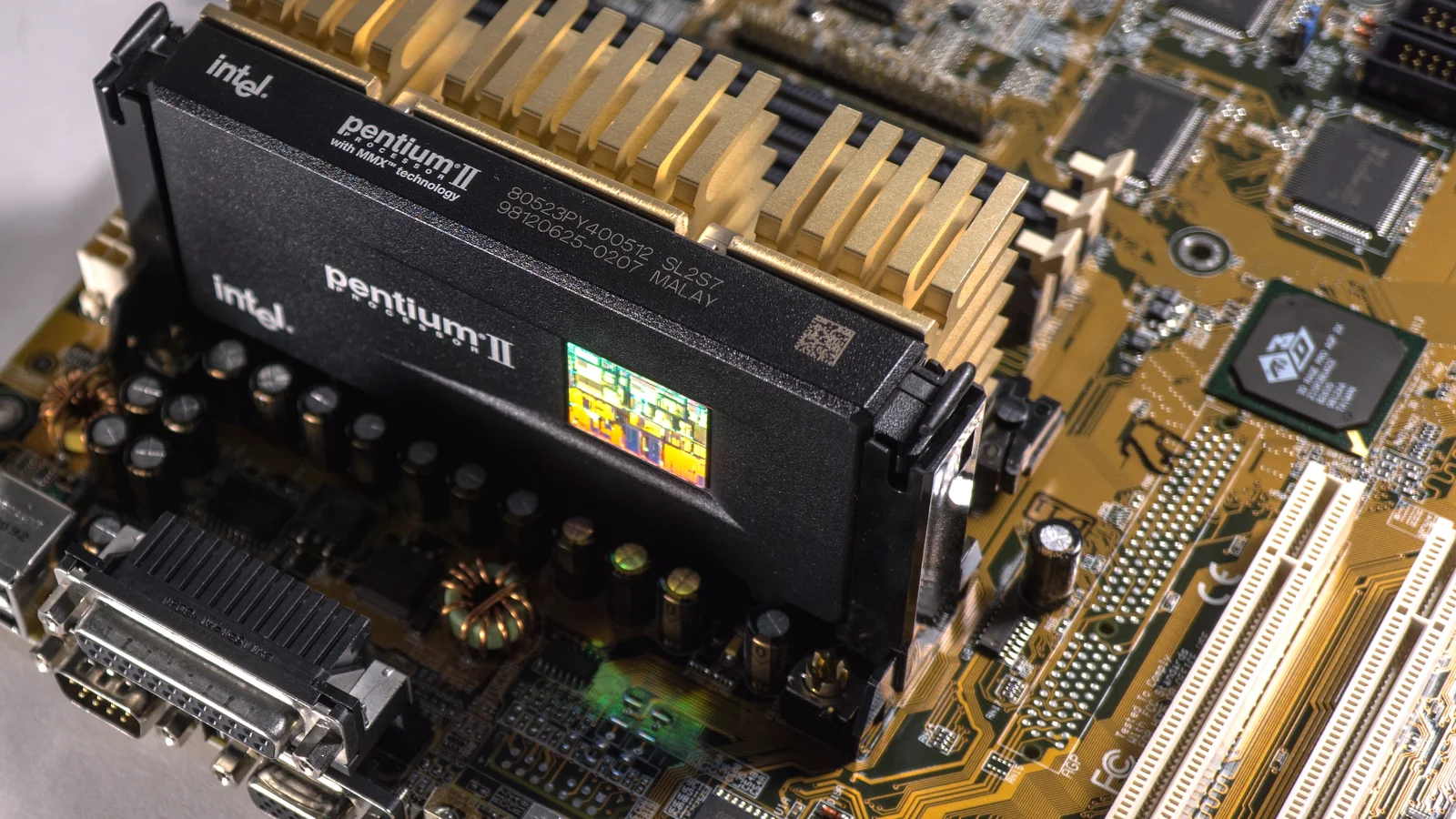
The most interesting PC hardware of 2026 is a motherboard built for memory that came out in 2014.
In August, Gigabyte launched 2 of them. The B450M D3HP and the D3HP WIFI6E sit on the B450 chipset, which shipped in 2018, with 4 DDR4 slots and room for 128 GB. AMD marked 10 years of the AM4 socket by reissuing the Ryzen 7 5800X3D, a chip from 2022. Gigabyte is also reviving dual-format LGA 1700 boards, for Intel processors expected in early 2027. None of that is nostalgia. It is arithmetic.
This is an assessment, not a build log. I have not fitted one of these boards, and no number below is a measurement of mine. Gigabyte’s product pages refuse to load for me, so the board specs come from Tom’s Hardware’s write-up of the launch, which itself followed The Register’s report. The rest is AMD’s spec sheet, TrendForce’s contract prices, the UN’s e-waste figures and End of 10’s own numbers.
What actually shipped
The B450M D3HP is a microATX board with 4 DDR4 slots and 128 GB max at DDR4-2667. It has 2 M.2 slots, one at PCIe 3.0 x4 and one at PCIe 2.0 x2, plus 4 SATA ports. There is one PCIe 3.0 x16 slot, 1 gigabit Ethernet, 7 USB ports and a 4+2 phase power stage. It takes Ryzen 3000 through 5000, from 35 W parts to 105 W ones.
No price was announced at launch, and Tom’s could not find either board at a US retailer in mid-August. Old B450 boards in this class sold for about 50 to 80 dollars when they were current. Whether that number survives 2026 is the question.
Gigabyte is not alone. A B550 X-Eagle gives you 4 DDR4 slots, and a B760M Aorus Elite covers Intel chips. In China, vendors will sell you a new DDR3 board for a Xeon E5 on LGA-2011, a socket from 2011. That is the same joke told louder.
Why now: the memory bill came due
TrendForce’s 30 September note has conventional DRAM contract prices up 10-15% this quarter, and NAND up 15-20%. Suppliers are pushing advanced capacity at servers and leaving the consumer side to queue. Its forecast adds a detail worth keeping: PC DRAM supply could fall again in 2027.
The Verge did the shopping on 9 October. A 32 GB DDR5 Corsair Vengeance kit: 620 dollars. The DDR4 equivalent: 260. That is still more than 32 GB of DDR4 cost in mid-2025, so the cheap side is being dragged along too, just more slowly.
The boards are a response to a price signal, not a design statement. The shortage is not a fab accident either. It is datacenter demand, and the desktop buyer is the residual.
The 2019 machine is not the problem
Here is the part that should annoy anyone who replaced a working desktop in the last 2 years.
Take a 2019 build: a B450 board with a Ryzen 3000 chip. AMD’s own page for the 5800X3D lists B450 among the chipsets that support it. That chip is AM4, DDR4 only, 2 channels, 128 GB max, 96 MB of L3 cache, 105 W. It is not a museum piece. It is the top of the platform that board was built for, and it arrived 4 years after the board did.
The catch is firmware. A socket is a shape, not a promise. Whether your board ever got the BIOS that knows a 5000-series part is a question for the vendor’s support page. On a board from 2018, the honest answer is sometimes no.
Two more limits, out loud. B450 is a PCIe 3.0 platform, so the 4.0 lanes on that processor go unused. Fill 4 double-rank slots and the memory controller drops to 2667, which is why 2 larger sticks beat 4 smaller ones.
What it will not do
I would rather be clear than sell anyone a fantasy.
A 4+2 phase board with one x16 slot and 1 gigabit Ethernet is a fine NAS, firewall, backup target and a good machine to write on. It is not a workstation. Local models will crawl on it next to anything with a wide memory bus. The bottleneck moved to bandwidth years ago, and DDR4 at 2667 does not have it to give.
You get no out-of-band management, no warranty on used parts, capacitors with 7 years of heat behind them, and a power supply due for retirement. The processor is ECC-capable — AMD lists it, conditional on the board doing its part — but most consumer B450 boards never wired it up. Check the board’s sheet, not the chip’s.
The e-waste ledger
The UN’s Global E-waste Monitor, from UNITAR and the ITU in March 2024, counted 62 million tonnes of electronic waste in 2022. That is up 82% from 2010. Only 22.3% was documented as collected and recycled. The report projects 82 million tonnes by 2030, with the documented rate falling to 20%.
The metals thrown away in 2022 were worth about 91 billion dollars. Less than 1% of rare earth demand is met by recycling any of it.
Then add the machines that were fine and retired anyway. End of 10, launched in May 2025, put the number of PCs dropped by Windows 10’s end of support at 200 to 400 million. It also noted that making a computer accounts for more than 75% of the carbon it will ever emit. Support ended on 14 October 2025. That date is also International E-Waste Day, which is the kind of coincidence that stops being funny.
Why keeping it alive is a political act
Not because of the recycling. Because of who decides when the machine is finished.
A support date is a business decision wearing a technical costume. When a vendor stops shipping firmware, nothing physical has changed. The copper is the same. What changed is that someone with a spreadsheet decided the remaining users were not worth the engineering hours. That is their right. It is also not a law of nature.
Keeping a 2019 machine in service is a small refusal of that logic. It says the memory is the asset and the board is the consumable, which is the reverse of how the industry wants you to see it. It also puts the upgrade decision in your hands, while the alternative costs 620 dollars for a memory kit.
The honest counterpoint: this is not a boycott. You are still buying a new board from the same supply chain, and the used market is somebody else’s depreciation. It reforms nothing. It changes what you depend on, and for how long.
Where this is heading
My read: DDR4 boards keep appearing through 2027. The LGA 1700 revival lands in early 2027, Intel permitting. DDR4 prices keep climbing behind DDR5 rather than staying flat. The arbitrage narrows as it becomes popular, like every good arbitrage.
The useful window is probably 12 to 18 months. When new capacity comes online, these boards will look quaint again, and the people who bought one will still have a working machine. That is the asymmetry: buying early costs a dull board, while waiting costs another year of renting capacity you could own.
What to do now
Write down what you have. Socket, chipset, how many slots, how many are filled, and what the vendor’s support page says about the newest processor it will take. That last item is the whole decision.
Then buy the board, not the RAM. Two matched sticks, not 4. Check ECC on the board’s spec, not the processor’s. Run a full pass of memtest before you trust it with anything. Put a distribution on it with support past 2028, and keep the old board as a spare, because the spare is now the scarce part.
If you are not sure where to start, End of 10 keeps a list of local groups that will help move a machine over: endof10.org.
The cheapest computer you will buy this decade is the one already in the cupboard, plus a board and a BIOS update nobody advertises. That is not sentiment. It is the one upgrade path where the vendor cannot change the terms after you have paid.
If you want more of this arithmetic, the archive is here: sovereign-computing.com/blogs.